
6 Things You Should Never Clean With Hydrogen Peroxide, According to Pro Cleaners
Hydrogen peroxide has earned a loyal place in many natural-cleaning cabinets. The familiar brown bottle is affordable, easy to find, and useful for certain stains and household tasks. Because it breaks down into water and oxygen, it can feel like a simple, eco-conscious alternative to harsher products.
But natural does not automatically mean safe for every surface.
At Om Sweet Om Cleaning, we believe mindful cleaning begins with choosing the right product for the surface—not reaching for one ingredient to clean the entire home. Whether you are caring for a home in Roseville, Rocklin, Lincoln, or elsewhere in South Placer County, a little cleaning chemistry can help you protect your finishes, furnishings, and appliances.
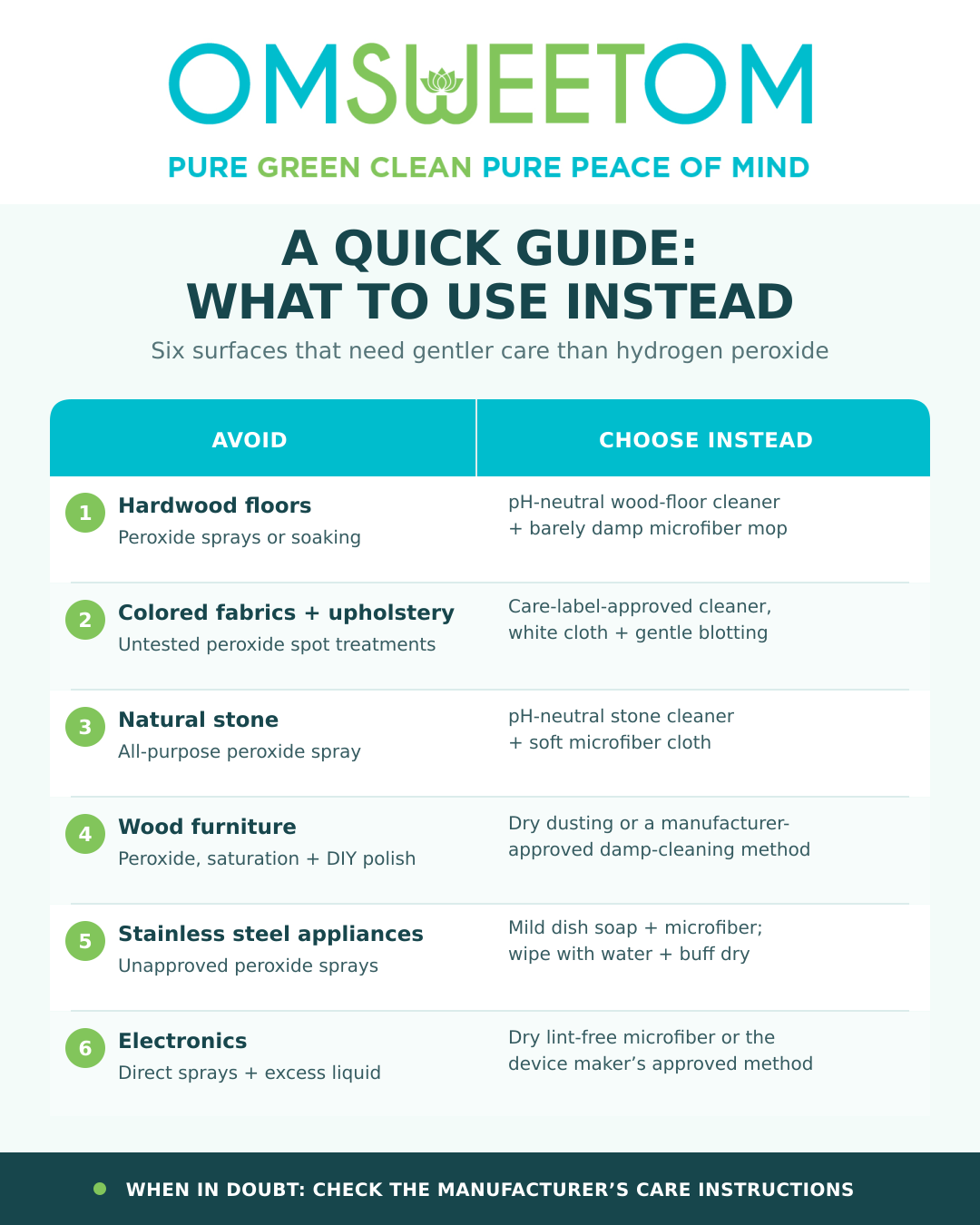
Here are six things you should not routinely clean with hydrogen peroxide, along with safer, gentler options.
What Is Hydrogen Peroxide, and Why Can It Cause Damage?
Hydrogen peroxide is a compound made of hydrogen and oxygen. The 3% solution sold in most grocery stores and pharmacies is much weaker than commercial or hair-processing formulas, but it is still reactive.
When hydrogen peroxide breaks down, it releases oxygen. This oxidation process is part of what makes it useful for certain stain-removal and disinfecting applications. It is also what gives peroxide its bleaching ability. On a compatible, colorfast surface, that reaction may be useful. On a sensitive finish or dyed material, it may leave a pale spot, dull patch, uneven sheen, or permanent discoloration.
The safest rule is simple: always read the care label and the manufacturer's instructions. If a product or surface maker does not approve hydrogen peroxide, do not assume an online cleaning hack is safe.
1. Hardwood Floors
Hardwood floors bring warmth and grounding energy into a home, but they need thoughtful care. Hydrogen peroxide is sometimes recommended online for dark pet stains or water marks in wood. That is a specialized stain-treatment situation—not a good routine floor-cleaning method.
Hydrogen peroxide may lighten the wood, bleach the stain surrounding the damaged area, or create an uneven finish. If the floor's protective coating is worn, scratched, or unsealed, liquid may penetrate the wood. Too much moisture can also contribute to swelling, cupping, or other damage.
The National Wood Flooring Association advises following the flooring or finish manufacturer's maintenance recommendations. Using an unapproved household cleaner may harm the finish and can create problems when the floor needs recoating.
A safer option: Vacuum or dry-mop first to remove grit. Then use a barely damp microfiber mop and a pH-neutral cleaner specifically approved for your type of wood floor. Avoid soaking the surface, and wipe spills promptly.
If you are trying to remove a deep, dark stain, consult a hardwood-floor professional. The area may need professional spot treatment, sanding, staining, or refinishing to restore an even appearance.
2. Colored Fabrics and Upholstery
Hydrogen peroxide is a form of oxygen bleach. Even a standard 3% household solution can fade some dyes, leaving a lighter spot that becomes more noticeable after the fabric dries.
The challenge is that fabrics react differently. Fiber type, dye, finish, age, and previous cleaning products all affect the result. A solution that appears harmless on one white, washable fabric may permanently alter a navy sofa, patterned chair, wool rug, velvet cushion, or vintage textile.
The University of Georgia's textile-care guidance recommends testing hydrogen peroxide for colorfastness on dyed fabrics. Upholstery also has another risk: overwetting may spread the stain, leave a water ring, affect the backing, or cause the fabric's finish to migrate.
A safer option: Begin with the upholstery care code and the manufacturer's directions. Blot fresh spills with a clean white cloth—do not scrub. For many water-safe fabrics, a small amount of manufacturer-approved upholstery cleaner applied to the cloth may be appropriate. Never saturate the cushion.
For delicate, valuable, or unknown fabrics, call a professional upholstery cleaner. If hydrogen peroxide is specifically recommended for a washable item, test it in a hidden area first and follow the care label exactly.
3. Natural Stone Surfaces
Marble, travertine, limestone, granite, slate, and other natural stones are beautiful because they are unique. Their mineral composition, porosity, polish, and sealer can vary, which means they should not all be treated as if they were the same material.
For everyday cleaning, do not spray undiluted hydrogen peroxide across natural-stone counters, showers, floors, or vanities. Repeated or careless use may affect some sealers, alter darker stone, or leave an uneven appearance. Liquids can also migrate through porous stone or into grout and seams.
There is an important exception: the Natural Stone Institute lists hydrogen peroxide as an ingredient in certain professionally selected poultices for specific organic or biological stains. That does not make it a universal stone cleaner. The correct method depends on the stone and the stain, and some treatments may lighten dark stone or affect the finish.
A safer option: Use a soft microfiber cloth or mop with a pH-neutral cleaner labeled for natural stone. Wipe up spills quickly and dry the surface to help prevent spotting. Avoid improvised recipes until you know exactly what kind of stone and sealer you have.
For a stubborn stain, contact the stone fabricator, installer, or a restoration specialist. Treating the wrong stain with the wrong chemistry can make it harder to remove.
4. Wood Furniture
Like hardwood floors, wood furniture may have a finish that reacts poorly to hydrogen peroxide. Varnish, lacquer, shellac, wax, oil, stain, and painted finishes all have different care needs.
Hydrogen peroxide can lighten stained or unfinished wood, dull a glossy topcoat, soften some finishes, or leave a cloudy patch. Antique and handcrafted pieces deserve extra care because the finish may be old, delicate, or difficult to identify. Liquid can also settle into joints, veneer edges, cracks, and unsealed areas.
A safer option: Remove loose dust with a soft, dry microfiber cloth. If the manufacturer permits damp cleaning, use a well-wrung cloth with a tiny amount of mild, compatible cleaner, working with the grain. Follow immediately with a dry cloth so moisture does not remain on the surface.
Do not assume that a natural oil or homemade polish is appropriate, either. Some products create buildup, attract dust, or complicate future refinishing. For valuable furniture, ask a furniture-care or restoration professional before treating a stain.
5. Stainless Steel Appliances
Stainless steel sounds nearly indestructible, but appliance surfaces are more complicated than the name suggests. Refrigerator doors, ovens, dishwashers, range hoods, and microwaves may have clear coatings, fingerprint-resistant finishes, decorative films, printed markings, or nearby materials that are not stainless steel.
Household-strength hydrogen peroxide is compatible with some grades of stainless steel under controlled conditions. However, that does not mean it is the best everyday appliance cleaner. Spraying it freely can leave streaks, expose seams and controls to moisture, or affect a manufacturer's specialty coating. Stronger concentrations, long dwell times, contaminated tools, and incomplete rinsing can increase the risk of discoloration or corrosion.
This is another area where “never” really means: do not use it as a general DIY cleaner unless the appliance manufacturer approves it.
A safer option: First check the appliance manual. In many cases, a soft microfiber cloth with warm water and a small amount of mild dish soap will remove fingerprints and kitchen soil. Wipe in the direction of the grain, remove any cleaner residue with a clean damp cloth, and buff dry.
Avoid abrasive powders, steel wool, harsh scrubbers, and chlorine bleach unless the manufacturer explicitly allows them. These can scratch the surface or damage its protective layer.
6. Electronics
Phones, tablets, laptops, televisions, computer monitors, keyboards, remote controls, and smart-home devices should never be sprayed directly with hydrogen peroxide—or with any liquid cleaner.
Moisture can enter charging ports, speaker openings, buttons, keyboards, and seams. Hydrogen peroxide may also affect screen coatings, adhesives, printed symbols, plastics, and other components. Even when the outside looks dry, liquid may have traveled inside the device.
A safer option: Turn off and unplug the device when the manufacturer recommends it. Use a clean, dry, lint-free microfiber cloth for routine dust and fingerprints. For disinfecting or stubborn soil, follow the exact instructions from the device manufacturer. If a liquid is permitted, apply it to the cloth rather than spraying the electronics, and keep moisture away from every opening.
Different screens and devices have different coatings, so one universal electronics recipe does not exist. When in doubt, gentle and dry is the better place to begin.
2026
Hydrogen Peroxide Safety Tips for the Rest of Your Home
Hydrogen peroxide can still be useful when the product label and surface instructions support it. Use it with intention rather than treating it as an all-purpose cleaner.
Use only the concentration required for the task. Do not substitute stronger hair-processing or commercial peroxide for a household formula.
Keep it in its original, labeled container. The familiar dark bottle helps slow breakdown caused by light.
Test a hidden area before treating a visible surface, especially on anything dyed, sealed, coated, or painted.
Wear gloves and provide ventilation as directed by the product label.
Never mix hydrogen peroxide with vinegar in the same bottle or container. The combination can create peracetic acid, which is irritating and corrosive.
Do not mix disinfectants or cleaning chemicals. More product does not mean more cleaning power.
Clean visible soil first. Disinfect only when it is needed and use a product labeled for the surface and purpose.
Keep all cleaning products away from children and pets.
Why Professional Eco-Friendly Cleaning Is About More Than “Natural” Products
A truly eco-friendly cleaning routine is not simply a collection of homemade recipes. It is a thoughtful system that considers cleaning chemistry, indoor air, surface compatibility, product concentration, dwell time, tools, and technique.
Using the wrong product may create damage that requires replacement or refinishing—hardly a sustainable outcome. Using the right amount of a well-chosen product, paired with quality microfiber and good technique, can reduce waste while protecting your home.
At Om Sweet Om Cleaning, our goal is to create a home that feels clean, calm, and cared for. We choose methods based on the surface and the household's needs. That may mean HEPA vacuuming for fine particles, damp microfiber for dust, steam where appropriate, or a surface-specific cleaner instead of a trendy internet solution.
We also understand that homes throughout Roseville, Rocklin, and Lincoln have different materials and lifestyles—from busy family kitchens and pet-friendly living rooms to natural-stone bathrooms and newly installed hardwood floors. A mindful cleaning plan should honor those differences.
Looking for an Eco-Friendly Cleaning Company Near You?
If you are searching for an eco-friendly house cleaning service in Roseville, Rocklin, or Lincoln, Om Sweet Om Cleaning is here to help. We offer recurring cleaning, deep cleaning, and thoughtful add-on services designed to support a healthier, more peaceful home.
Let us take the guesswork out of cleaning products and methods while giving you back something precious: your time.
Clean home. Calm mind. Healthy living.
Contact Om Sweet Om Cleaning to schedule a walkthrough or request an estimate for your home in South Placer County.
Frequently Asked Questions
-
No. A 3% solution is mild compared with commercial concentrations, but it still has oxidizing and bleaching properties. Check the product label and the surface manufacturer's instructions, then test in a hidden area when appropriate.
-
Yes. Hydrogen peroxide may fade or lighten some dyes. Never assume a colored fabric is safe. Read the care label, check the upholstery cleaning code, and perform a colorfastness test in an inconspicuous area.
-
Not as a universal daily cleaner. Some stone professionals use hydrogen peroxide in carefully prepared poultices for particular stains, especially on certain light-colored stones. Routine care should generally begin with a pH-neutral stone cleaner approved for the stone and sealer.
-
Compatibility depends on the grade of steel, peroxide concentration, contact time, temperature, contamination, and any decorative coating on the appliance. Household peroxide may be compatible with bare stainless steel in some situations, but it should not be used as a general appliance cleaner unless the manufacturer approves it.
-
Blot the liquid promptly with a clean white cloth without spreading it. Follow the manufacturer's care instructions and avoid adding another chemical. If the item is valuable or discoloration appears, contact a qualified floor, furniture, textile, or upholstery professional.
-
Hydrogen peroxide is a lower-residue oxidizing cleaner that breaks down into water and oxygen. When used thoughtfully, at the proper concentration, and only on compatible surfaces, it can be a useful part of an eco-conscious cleaning routine. However, it is still a chemical disinfectant—not an everyday cleaner for every surface.