
Pet-Friendly Cleaning: How to Keep Their Bowls and Beds Fresh
If you love your furry friend (and I know you do), you probably want their food area and sleeping area to be as cozy and hygienic as possible — without turning your home into a chemical minefield. This is especially important in Roseville, where seasonal pollen, dust, and outdoor allergens can sneak into your home, triggering itchy skin, sneezing, or watery eyes in sensitive pets. Let’s break down what to clean, how, and why it matters, keeping your pet safe, comfortable, and happy.
1.) The Food Area: More Than Just a Bowl
Did you know your pet’s food bowl can harbor more bacteria than a toilet seat? Not because your pet is messy, but because we often don’t wash bowls with hot, soapy water or sanitize them as regularly as we think we do. Cleaning the food area is especially important for dogs who drool or splash on walls and for pets on a wet food diet, where leftover food particles can stick to floors and walls. These crumbs and spills aren’t just an eyesore — they can worsen allergies or digestive sensitivities, particularly in pets prone to food sensitivities common in the Roseville area.Daily Habits:
Wash bowls daily with hot water and a mild dish soap.
Wipe walls and floors around the feeding area, especially if you serve wet food — splatter can attract bacteria and mold.
Sweep or mop the floor to catch crumbs, drips, and hair.
Weekly Habits:
Sanitize bowls:
Stainless steel → vinegar soak or dishwasher on high heat
Ceramic/glass → dishwasher or hot vinegar rinse
Avoid harsh chemicals — pets are more sensitive than we are
Tip: If your pet has a mat under their bowls, wash it weekly too. A quick rinse doesn’t cut it.
Why it matters for allergies: Keeping floors, walls, and bowls clean helps reduce exposure to dust mites, mold, and leftover food particles, which can trigger sneezing, itchy skin, or digestive upset.
2.) The Sleeping Area: Soft, Cozy, and Clean
Pet beds and blankets are magnets for fur, dander, dust mites, and pollen, and they can get smelly fast if not maintained. Roseville’s seasonal pollen can cling to bedding, causing itchy skin, watery eyes, or sneezing in sensitive pets.
Extra pet dander isn’t just an issue for your furry friends — it can also trigger allergies or sensitivities in family members and guests, making it even more important to keep beds, blankets, and surrounding areas clean.
Defurring & Hair Removal:
Use a rubber brush, lint roller, or pet hair remover glove to lift fur and pollen.
Vacuum Options:
HEPA-filter vacuums are excellent for deep cleaning dander, pollen, and hair.
Handheld vacuums are great for quick, daily touch-ups.
Sanitizing:
Steam cleaning kills germs and odors without harsh chemicals — perfect for beds and carpets. Our favorite? The Dupray Neat, which is powerful, pet-safe, and makes deep cleaning a breeze.
Wash blankets and removable bed covers weekly in hot water (check care labels!).
3.) Spot Cleaning Tips
Enzyme-based cleaners break down proteins in urine, vomit, or food messes naturally. Our favorites:
Biokleen Bac‑Out Stain & Odor Remover – great for tougher messes (scores a B on EWG, pet-safe with moderate caution)
Ultimate Enzyme+ Odor & Stain Eliminator – effective for protein-based stains and odors
Non-enzyme alternatives:
Molly Suds Pet Odor Eliminator & Odor Remover – gentle, effective, and a safe alternative if you prefer a non-enzyme option
Safety tip: Even with pet-safe cleaners, it’s best to blot the area with warm water after treatment before allowing your pet back on the bed or carpet. This ensures no residue is left that could irritate sensitive noses or skin.
Non-toxic sprays (vinegar, baking soda, plant-based) are also safe for pets and work well on small spills.
Blot first instead of scrubbing to avoid spreading the mess.
4.) Extra Tips for a Healthy, Happy Pet Space
Rotate bedding: Keeps a fresh, allergen-reduced surface available at all times.
Air it out: Open windows when pollen counts are low, or use a pet-safe air purifier to reduce dust, dander, and pollen indoors.
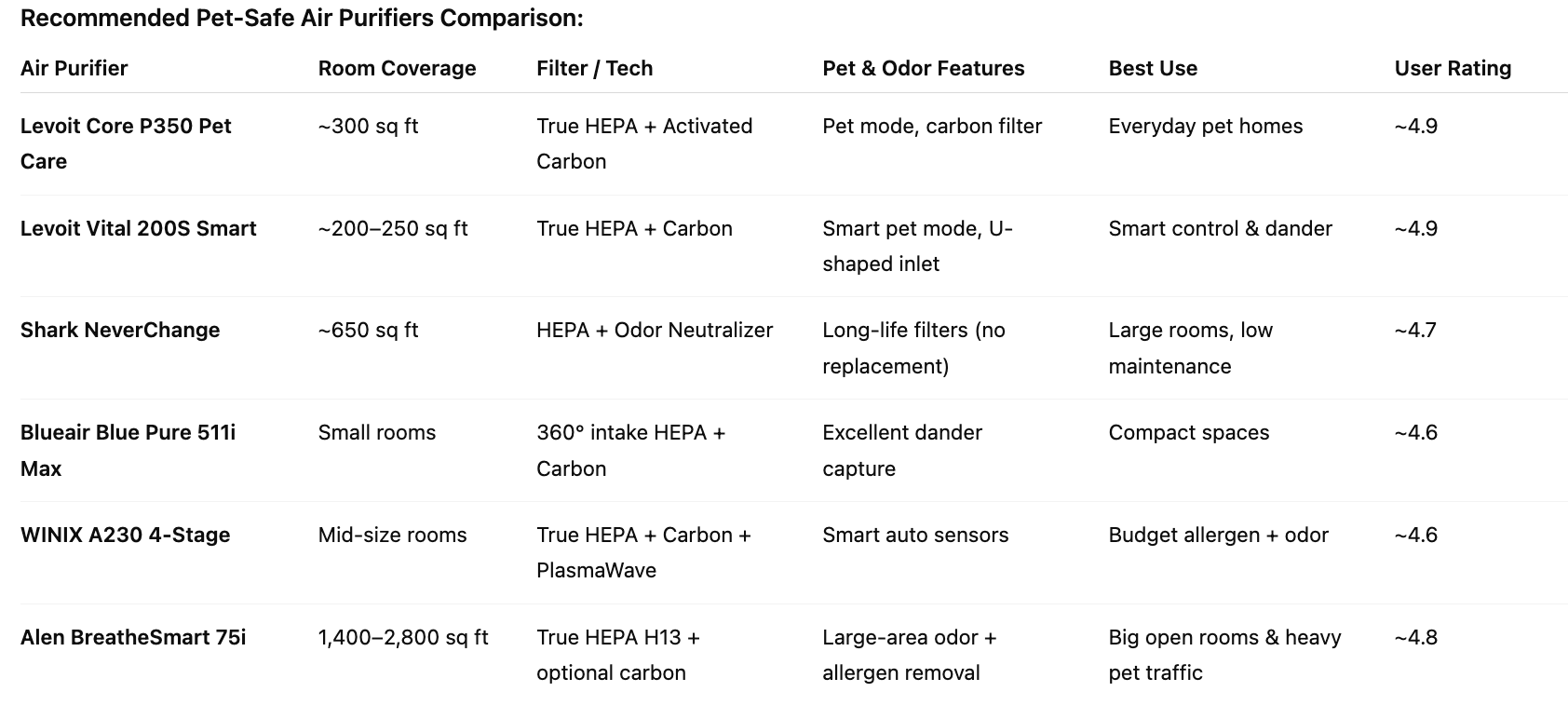
Air Purifiers recommended for homes with pets.User Rating (1–5)
Check for damage: Old or ripped beds trap hair, pollen, and germs more easily — replace as needed.
Consistency is key: Small daily efforts prevent bigger messes and reduce allergy triggers for both pets and humans.
The Bounce
A clean pet space isn’t just about hygiene — it’s about love in action. Healthy floors, sanitized bowls, and fresh bedding = happier pets, fewer tummy issues, and reduced allergy flare-ups in your home.