
The internet is overflowing with advice about cleaning with vinegar. Scroll through social media for a few minutes and you may see white vinegar recommended for shower doors, countertops, floors, appliances, grout and almost everything in between.
Vinegar is affordable, familiar and relatively simple. It can be useful for certain cleaning jobs, especially when the problem is light mineral buildup. But it is not an all-purpose cleaner, it does not work on every kind of soap scum, and it can permanently damage some of the most beautiful surfaces in your home.
At Om Sweet Om Cleaning, we believe green cleaning should be more than swapping a conventional bottle for a popular DIY ingredient. A truly mindful approach asks three questions: What is the soil? What is the surface? And what is the safest product or method that can do the job well?
If you live in Roseville, Rocklin, Lincoln or the surrounding South Placer area, you may already know how quickly white spots and cloudy film can appear around faucets and on shower glass. Vinegar may help—but sometimes it is not the best answer. Let’s look at the chemistry in an easy-to-understand way.
What Is White Vinegar?
White distilled vinegar is mostly water with acetic acid. Food-grade white vinegar is commonly sold at about 5% acidity. Products labeled “cleaning vinegar” may be stronger, so they should never be treated as interchangeable with food vinegar or used without reading the label.
Because vinegar is acidic, it may react with and loosen alkaline mineral deposits. That is why it can sometimes help with:
Light hard-water spots on compatible glass
Mineral buildup on a removable, vinegar-safe showerhead
Cloudy deposits around some chrome fixtures
Certain odors
Light residue on acid-safe, nonporous surfaces
The word compatible matters. Before using vinegar, check the care instructions for the exact surface or fixture and test a small, hidden area. “Natural” does not automatically mean gentle on every material.
The Pros of Cleaning With Vinegar
1. It is inexpensive and easy to find
White vinegar is available in almost every grocery store and costs less than many specialty cleaners. For a small, appropriate cleaning task, it can be a convenient option.
2. It can loosen some hard-water minerals
Hard water contains dissolved minerals, especially calcium and magnesium. As water evaporates, those minerals can remain on the surface as spots, scale or a chalky film. Since vinegar is acidic, it can help dissolve some alkaline mineral buildup on surfaces that tolerate acid.
3. It has a short, recognizable ingredient list
For households trying to reduce fragrances or simplify their cleaning cabinet, plain white vinegar may feel more approachable than a heavily scented product. However, the sharp vinegar odor can still be irritating or unpleasant for some people, especially those with respiratory or chemical sensitivities.
4. It can support low-waste cleaning habits
When vinegar is appropriate for the surface, buying a larger container and using a reusable spray bottle may reduce packaging. Just label the bottle clearly, keep it away from children and pets, and never combine it with other cleaning chemicals.
The Cons of Cleaning With Vinegar
1. Vinegar is not a true all-purpose cleaner
Acid works well against certain mineral deposits, but many everyday messes contain grease, body oils, food soil or sticky product residue. Those soils usually need a detergent or surfactant that can lift and carry them away. Vinegar alone may leave the surface looking uneven or still feeling dirty.
2. It can etch or dull natural stone
Never use vinegar on marble, limestone, travertine or on products containing those stones. Acid can react with calcium carbonate in the stone, creating dull or etched areas that cannot simply be wiped away.
Granite and other stone products vary, and their sealers can vary too. Instead of assuming vinegar is safe, follow the stone fabricator’s or manufacturer’s care directions. A pH-neutral stone cleaner is the safer everyday choice.
3. Repeated use may harm finishes, grout and components
Vinegar may dull certain floor finishes, affect some sealers, contribute to deterioration of cement-based grout with repeated exposure, or damage metals and appliance components that are not acid-safe. A DIY tip may look successful after one use while slowly shortening the life of the material.
4. It is not a dependable household disinfectant
Cleaning and disinfecting are different jobs. Cleaning removes dirt and many germs with soap or detergent, water and physical action. Disinfecting uses a registered product to kill specified germs when the label directions and contact time are followed.
Vinegar may affect some microorganisms, but it does not kill all germs and should not be treated as a replacement for an EPA-registered disinfectant when disinfection is actually needed. In most homes, routine cleaning is usually enough unless someone is ill or a higher-risk situation calls for targeted disinfection.
5. It can become dangerous when mixed with other products
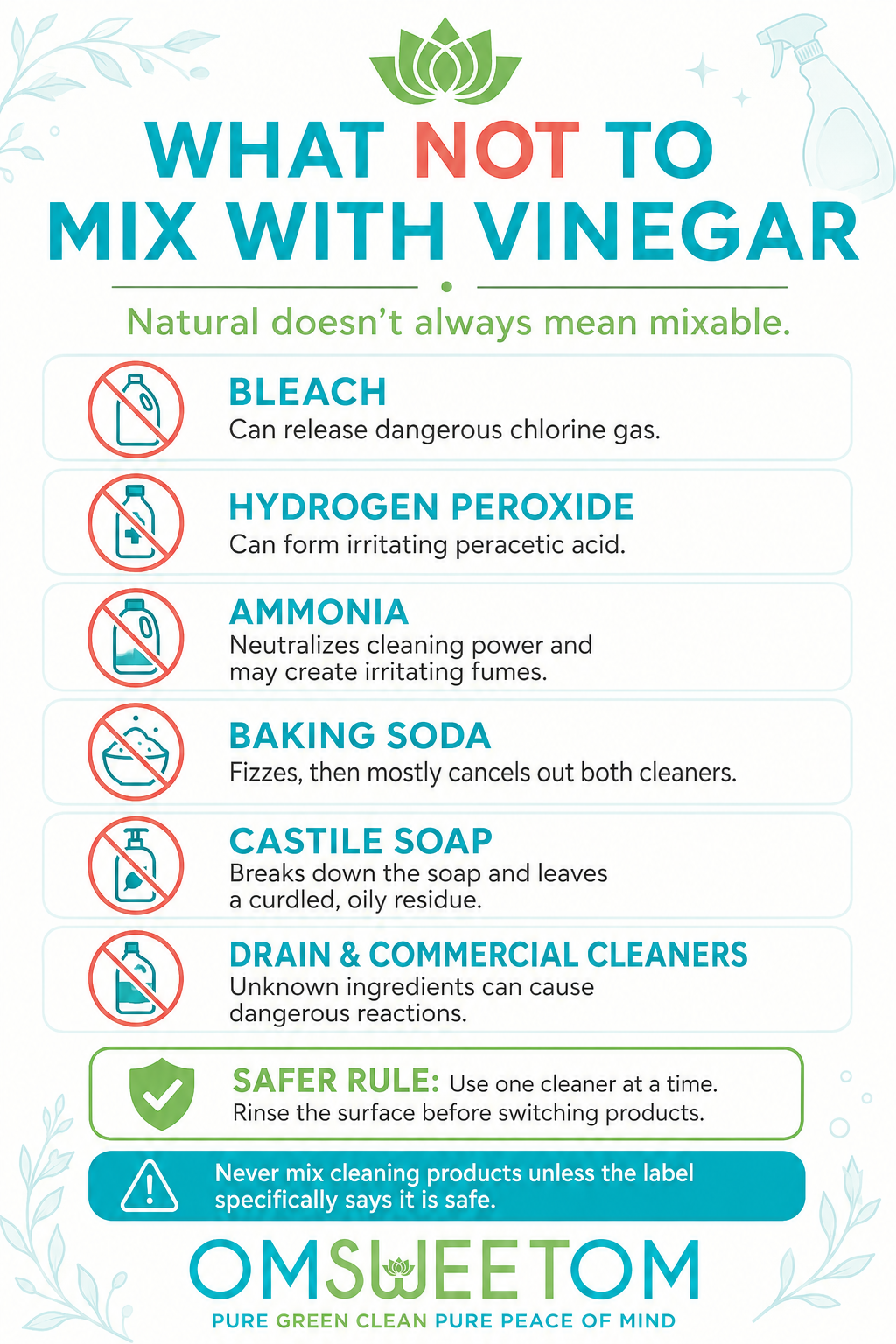
Never mix vinegar with chlorine bleach. The combination can release dangerous chlorine gas. Do not mix cleaning products unless the label specifically tells you to do so.
Vinegar and hydrogen peroxide should also remain in their original containers and should not be combined in the same bottle. Use one product at a time, follow its label and rinse the surface between separate cleaning steps when appropriate.
Does Vinegar Remove All Soap Scum and Hard Water?
No—and this is where many homeowners become frustrated.
Hard-water scale and soap scum are related, but they are not always the same thing. Hard-water scale is primarily mineral residue. Soap scum is often a more complicated mixture of minerals, bar-soap residue, body oils, skin cells and personal-care products. The film on a shower door may have several of these layers at once.
Vinegar can help dissolve part of the mineral layer on acid-safe glass or fixtures. But if the buildup is thick, greasy or made up of body oil and product residue, vinegar may not have enough cleaning power. It may soften the cloudy mineral portion while leaving the oily layer behind.
There is another twist: true soap—including Castile soap—can react poorly when directly mixed with vinegar. Castile soap is alkaline, while vinegar is acidic. Combining them can break the soap apart and create a curdled or oily residue, reducing the soap’s cleaning ability. They may both belong in a green-cleaning cabinet, but not mixed together in the same bottle.
A Better Non-Toxic Solution for Soap Scum
The best method depends on both the surface and the type of buildup.
Step 1: Remove oils and product residue
Begin with warm water and a small amount of a surface-safe, fragrance-free dish detergent or plant-based surfactant cleaner. This helps lift body oils, shampoo, conditioner and greasy residue. Apply it with a non-scratch cloth or scrub pad approved for the surface.
Avoid using too much product. More soap can mean more residue—especially in hard water. Rinse thoroughly and dry the surface.
Step 2: Treat the remaining mineral film
If a chalky deposit remains and the surface manufacturer confirms that mild acid is safe, use a labeled mineral-deposit remover with safer ingredients or a carefully tested vinegar solution. Give the product time to work according to its directions rather than scrubbing aggressively.
On natural stone, acid-sensitive tile, uncertain metals or specialty finishes, skip vinegar. Choose a pH-neutral cleaner made for that material, or ask a stone-care professional about a stone-safe mineral remover.
Step 3: Use gentle mechanical action
A non-scratch scrub pad, microfiber cloth or steam may help loosen buildup, provided the surface and its seals can safely tolerate the method. Steam is not appropriate for every material, so always check manufacturer guidance.
Step 4: Rinse and dry
Cleaning solution left behind becomes part of the next layer of buildup. Rinse well, then dry shower glass and fixtures with a clean cloth. A quick squeegee after showers can make a surprisingly big difference.
For stubborn buildup, several gentle cleaning rounds are safer than one overly aggressive treatment. If scale has permanently etched glass or damaged a finish, cleaning alone may not restore it.
What Surfaces Should You Never Clean With Vinegar?
Avoid vinegar—or obtain specific manufacturer approval—on:
Marble, limestone and travertine: acid can etch and dull the stone.
Natural-stone counters, showers and tile: stone and sealers vary; use a pH-neutral stone cleaner.
Cement-based grout: frequent acid exposure may weaken or erode it, particularly when unsealed or already damaged.
Hardwood and stone flooring: vinegar may affect the finish, sealer or stone; follow the flooring manufacturer’s instructions.
Waxed or polished surfaces: acid may dull or strip the finish.
Cast iron, aluminum, brass and specialty metal finishes: vinegar may corrode, tarnish or discolor some metals.
Electronic screens: it may damage protective coatings.
Appliance interiors, gaskets and rubber parts: use only products approved in the appliance manual.
Anything cleaned with chlorine bleach: never combine bleach and vinegar.
When you are uncertain, pause. Replacing a damaged countertop, floor or fixture costs far more than choosing the correct cleaner.
Non-Toxic Alternatives to Vinegar
Green cleaning is not about finding one bottle for every job. It is about using the least hazardous effective option in the correct way.
For routine cleaning
Choose a fragrance-free or lightly scented plant-based detergent, ideally one carrying the EPA Safer Choice label. A properly diluted neutral cleaner can handle everyday soil on many washable surfaces without the risks of repeated acid exposure.
For natural stone
Use a pH-neutral cleaner specifically labeled for natural stone. A soft microfiber cloth and careful drying help protect the finish while reducing streaks and residue.
For greasy kitchen soil
A surface-safe detergent or degreaser will generally perform better than vinegar because surfactants surround and lift oily soil. Follow label directions and avoid overusing concentrate.
For hard-water deposits
Use a surface-compatible mineral remover only where the manufacturer allows it. On delicate stone or fixtures, a specialty professional may be the wisest and least wasteful solution.
When disinfection is needed
First clean the surface. Then use an EPA-registered disinfectant suitable for that surface, following the exact wet contact time and label directions. Homeowners looking for options with more carefully reviewed ingredients can explore EPA’s Design for the Environment-certified disinfectants.
How to Prevent Soap Scum and Hard-Water Buildup
Prevention is gentler than restoration. These small habits can help:
Squeegee shower glass and tile after use.
Dry faucets and fixtures with a soft cloth.
Use only the amount of soap or cleaner you need.
Rinse cleaning products completely.
Wash microfiber cloths regularly without fabric softener.
Clean lightly and consistently instead of waiting for a thick layer to form.
Consider a water-softening or conditioning system if mineral buildup is a persistent whole-home issue.
Here in Roseville, Rocklin and Lincoln, staying ahead of buildup can protect shower glass, fixtures and tile while making weekly cleaning much easier.
Vinegar Is a Tool, Not a Whole Cleaning System
Vinegar is neither a miracle cleaner nor something that must be banned from every cleaning cabinet. It is simply an acidic tool with a limited purpose.
Used thoughtfully on a compatible surface, it may help with light mineral deposits. Used as a universal cleaner, it can disappoint you—or damage the very surfaces you are trying to care for.
At Om Sweet Om Cleaning, our approach is holistic and surface-conscious. We look at the material, the soil and the needs of the people and pets who live in the home. We use eco-conscious products, mindful techniques and professional knowledge to create a home that does not just look clean—it feels fresh, peaceful and cared for.
If hard-water spots, soap scum or everyday buildup are taking the joy out of your space, you do not have to solve the chemistry alone. Om Sweet Om Cleaning provides eco-friendly house cleaning in Roseville, Rocklin, Lincoln, Loomis, Granite Bay and surrounding South Placer communities.
Ready for a healthier, more peaceful clean? Contact Om Sweet Om Cleaning to request a quote and discover the difference of professional green cleaning.
Frequently Asked Questions
-
White vinegar is a relatively simple cleaning ingredient, but it is still an acid. It can irritate eyes or skin, has strong fumes for sensitive individuals, and can damage incompatible materials. Use it with ventilation and follow safe storage and handling practices.
-
Vinegar should not be relied upon as a complete mold-remediation method. Moisture must be corrected, porous contaminated materials may require removal, and larger or recurring problems should be assessed by a qualified mold professional. Never mix vinegar with bleach.
-
Vinegar is an acid and baking soda is a base. The fizz can provide brief physical agitation, but the ingredients react with and largely neutralize each other. In most cases, they are more useful as separate steps chosen for a specific soil and surface.
-
No. Adding vinegar directly to Castile soap can break the soap down into an oily, curdled residue and reduce its cleaning power. If both are appropriate for a particular acid-safe surface, use them as separate steps with a thorough rinse in between—never in one bottle.
-
The film may contain body oil, personal-care products and true soap scum in addition to mineral scale. Start with a surface-safe detergent to remove oily residue. Then address the remaining minerals with a compatible product. Older mineral damage may be etching rather than removable buildup.